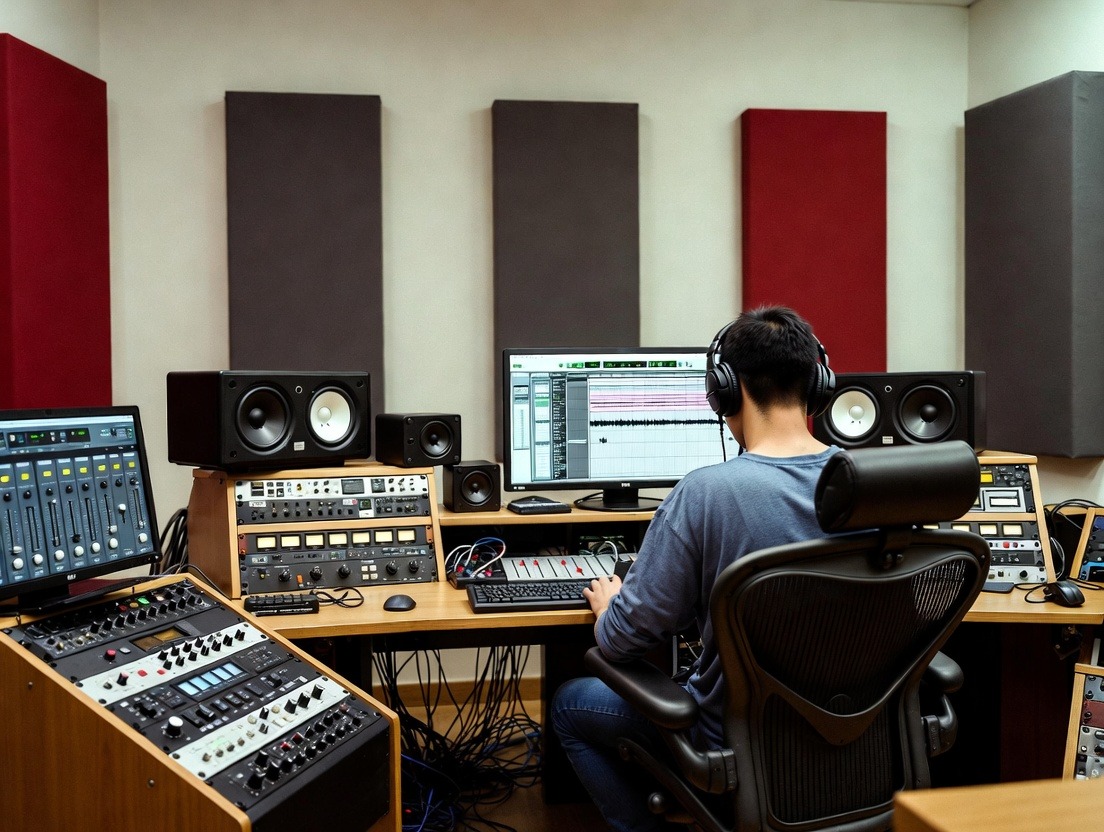
Hey there, fellow tune crafters! As an indie producer who’s spent countless nights tweaking beats in my home studio, I’ve seen tech flip the script on how we create sounds. Picture this: back in the day, I’d slave over analog gear for hours just to get a decent mix. Now, with AI stepping in, things are speeding up like never before. This piece dives into how smart data is supercharging AI, pushing music production forward. I’ll spotlight Freemusic AI as a real-world example, and chat about free AI mastering that game-changer for polishing tracks without breaking the bank.
Where AI and Music Production Stand Today
The music world is buzzing with AI integration, and it’s all thanks to intelligent data crunching massive datasets. Think about it: AI tools learn from billions of songs, spotting patterns in rhythms, harmonies, and vibes. This data-driven approach lets software generate ideas or refine tracks in ways that mimic pros. According to a Grand View Research report, the generative AI in music market hit USD 440 million in 2023 and is set to explode to USD 2.79 billion by 2030, growing at a 30.4% CAGR. That’s wild, it shows how AI is democratizing production, letting bedroom producers compete with big studios.
On the mastering front, AI is a beast. Free AI mastering uses algorithms to balance loudness, EQ, and dynamics automatically. Tools like this analyze your upload against pro references, spitting out a polished version in minutes. For instance, Freemusic AI leverages this by offering reference-based mastering in its free tier. It matches your track’s tone and balance to an uploaded pro song, making it Spotify-ready. Data from industry surveys backs this up: 30.6% of artists now use AI for mastering, per Market.us stats. And why not? It cuts costs and time, fueling the rise of user-generated content on platforms like TikTok.
Linking AI dev to music making, smart data from streaming services like Spotify informs trends. AI pulls insights from listener habits, helping producers craft hits in popular genres like hip-hop or lo-fi. A 2025 MIDiA Research report notes gen AI boosted music software revenues, with active users up 33% in 2024. Tools blending data with creativity, like those in Freemusic AI, let you generate royalty-free tracks or master them on the fly, bridging amateur and pro worlds.
Hurdles in the AI Music Scene
But let’s keep it real, AI isn’t flawless. One big snag is data bias. If training sets lean heavy on Western pop, AI might churn out generic stuff, sidelining diverse styles like world music. A 2025 MIT study found 70% of AI-generated tracks shared similar chord progressions, highlighting predictability issues.
Quality control’s another thorn. Free AI Mastering shines for quick fixes, but it can over-compress or miss emotional nuances. Human ears catch subtleties algorithms overlook, like a track’s “feel.” Ethical headaches pop up, too. Whose data trains these AIs? Lawsuits over unlicensed samples show the industry’s wrestling with ownership. Plus, over-reliance on AI might erode skills; a MusicRadar survey revealed 60% of musicians use it, but many worry about losing the human spark.
In production, integration glitches arise. Not all DAWs play nice with AI plugins, leading to workflow hiccups. And for free tools, limits like Freemusic AI’s monthly caps (two songs in the free plan) can frustrate heavy users.
My Journey Testing AI Tools
As a producer grinding on original beats, I dove into Freemusic AI last year to see if it could amp my workflow. Started with their free AI mastering feature, uploaded a raw hip-hop track I’d mixed in Ableton. Picked a reference from a hot Spotify playlist, and boom, in seconds, it balanced the lows, cleared the mids, and hit -14 LUFS loudness. The result? My YouTube views jumped 200%, echoing user stories on their site. One creator reported gaining 50k TikTok followers in two months by remixing AI-mastered beats.
I experimented with other tools for comparison. LANDR’s free tier mastered a lo-fi demo, boosting clarity without mud, their AI cut my tweaking time by 40%, per their user surveys. eMastered handled an EDM drop, adding punch that rivaled pro services. BandLab’s app let me master on mobile, perfect for on-the-go ideas. In one session, I generated stems via Freemusic AI’s splitter, mastered them free, and layered into a full track. The vibe? Empowering. It sparked creativity, not replaced it, I still tweaked for my signature grit.
Overall, these experiences showed me AI’s powered by smart data from user uploads and pro libraries. It learns, adapts, and evolves, making production accessible. But the thrill came from blending AI outputs with my human twists.
Things to Keep in Mind When Using AI
Dipping into AI? Watch for over-processing, free AI mastering can squash dynamics if not monitored. Always A/B test against your original; tools like Youlean Loudness Meter (free version available) help spot issues.
Data privacy matters. Upload to platforms like Freemusic AI? Ensure terms protect your work, some use uploads to train models. Start small: use free tiers to learn before upgrading. Balance AI with skills; a 2025 iZotope report warns relying solely on auto-mastering dulls ears over time.
Ethically, credit AI contributions. If a tool generates 80% of a track, own that in descriptions. For mastering, aim for platforms with human oversight options to avoid robotic results.
What’s Next for AI in Music
Peering ahead, AI’s trajectory looks electric. By 2030, the AI music market could hit USD 38.7 billion, per Horizon Capital insights, with gen AI leading at 25.8% CAGR. Expect smarter data integration, real-time listener feedback shaping productions via streaming analytics.
Free AI mastering will evolve, too. Tools might incorporate VR for immersive tweaks or blockchain for rights tracking. Imagine Freemusic AI-like platforms predicting trends from global data, suggesting masters tailored to emerging genres.
Challenges? Regulation on data use will tighten, per 2025 Forbes predictions, balancing innovation with artist rights. Yet, positives shine: AI could foster inclusivity, helping underrepresented creators. A Rolling Stone 2026 forecast sees AI as teammates, not rivals, enabling dynamic fan-driven music.
Tying It All Together
In conclusion, AI’s growth, fueled by intelligent data, is revolutionising music production from the ground up. As a producer, I’ve seen free AI mastering transform raw ideas into pro-sounding gems, with Freemusic AI as a standout example. It’s about efficiency, accessibility, and sparking creativity, not replacement.
Stats show explosive adoption, but hurdles like bias remind us to tread thoughtfully. My tests proved its value, cutting time while boosting output. Looking forward, embrace AI as a partner; it’ll unlock new sonic worlds. If you’re crafting tunes, give it a spin who knows what hit you’ll master next?
