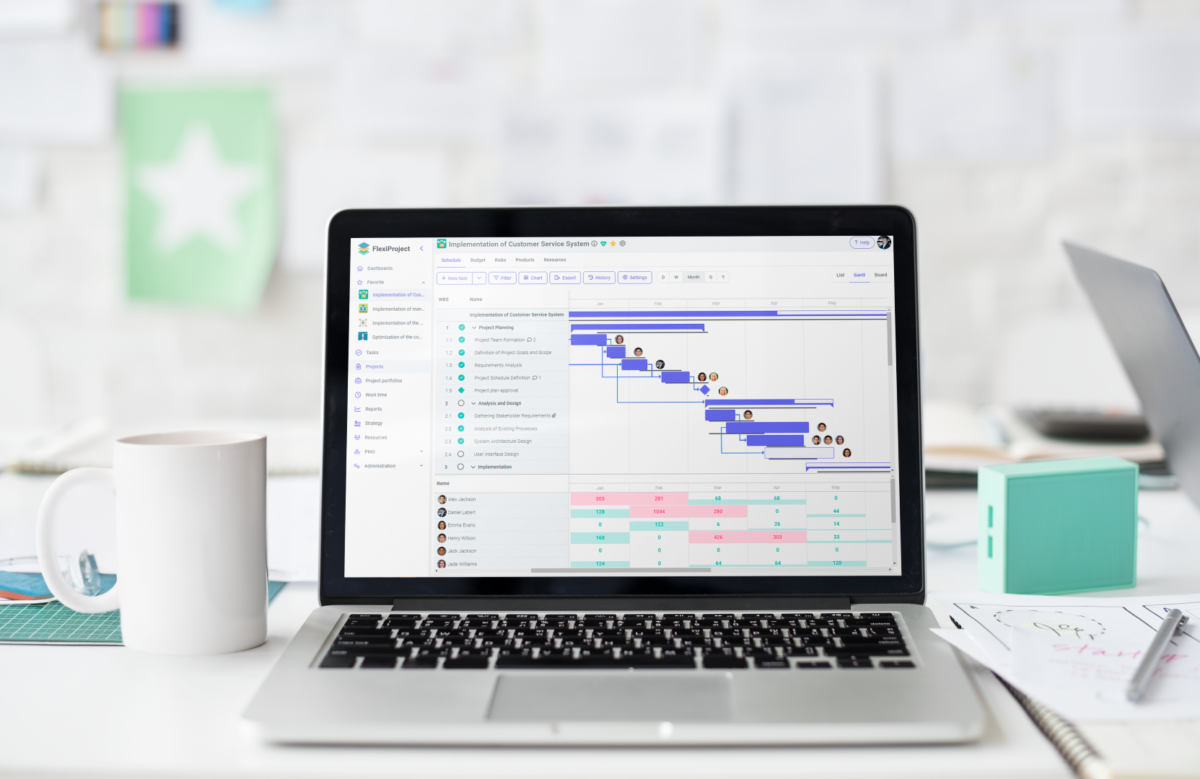
Small and mid-sized teams operate faster than ever, often running more parallel initiatives than companies several times their size did a decade ago. With distributed collaboration, growing client portfolios and a constant flow of internal requests, the operational question stops being whether to use a project management tool and becomes which kind of system genuinely fits the way a smaller team works. The honest answer rarely sits at the top of a “best of” ranking.
Why smaller teams struggle with project coordination
The intuition that smaller teams have simpler coordination problems no longer holds. A ten-person agency may run twelve client engagements at once. A fifteen-person software team can have three product streams, a maintenance backlog and an ongoing migration in flight. The number of parallel initiatives, not the headcount, is what determines whether coordination becomes painful.
The symptoms are familiar: tasks owned by no one in particular, deadlines that quietly drift, work duplicated because two people picked up the same item from a chat thread, and an expanding stack of tools that each solve a slice of the problem. Spreadsheets stop being a source of truth and become a source of disagreement. Communicators handle conversation but not commitment. The coordination overhead grows faster than the team itself.

What small and mid-sized teams actually need from project management software
Smaller teams usually need clarity more than complexity. The practical requirements are unglamorous: a clear view of what is in progress, who owns each task, how the work is sequenced over the next few weeks, and where the bottlenecks are forming. Add reasonable workload tracking, a way to plan timelines beyond the current sprint, and reporting that does not require manual reassembly each Friday afternoon. Flexibility matters more than feature breadth. A marketing team, a product squad and an operations group inside the same company will not work in identical ways, and a tool that forces one methodology onto all of them tends to be quietly abandoned. The systems that survive are the ones that adapt to existing workflows rather than replacing them with a vendor’s preferred process.
Features that matter more than “all-in-one” complexity
The “all-in-one” promise is appealing on a vendor page and exhausting in practice. Teams rarely fail because they lack features. They fail because project information becomes difficult to follow – buried in nested boards, scattered across modules, or hidden behind permissions that no one is sure how to configure. Onboarding time, in that sense, is a feature in its own right. For small and mid-sized teams, simplicity, transparency and predictable reporting tend to outperform a long capability matrix. Scalability matters too, but in a specific sense: the tool should still feel manageable when the team grows from twelve to thirty, and when the number of parallel projects doubles. Resource visibility – understanding who is overcommitted before the deadline slips – is more valuable than another dashboard widget.

How project visibility improves decision-making
The strongest argument for a structured project management system is not productivity but decision quality. When priorities, dependencies and workloads sit in a single, current view, approvals move faster and trade-offs become explicit. Leaders stop asking what is happening and start asking what should change. Status meetings shrink because they are no longer the only place where information surfaces.
At a certain point in this evolution – typically when a small team starts coordinating across functions or running enough parallel projects to need portfolio thinking – organisations begin to formalise governance. Some adopt dedicated PMO software to standardise how work is planned, reported and prioritised across teams, even when the “official” PMO is one person wearing several hats. The value lies less in the title and more in the discipline: shared definitions of progress, predictable reporting cadence, and a portfolio view that survives staff changes.
Marketing teams use this layer to balance campaigns against capacity. Software teams use it to manage roadmaps against on-call commitments. Agencies use it to keep client work profitable. The mechanics differ; the underlying need – operational transparency – does not.
The best tools are the ones teams actually use consistently
Adoption is the metric that quietly decides the outcome. A perfectly configured system that half the team ignores is worse than a simpler one that everyone updates without thinking about it. Usability beats feature breadth, visibility beats complexity, and structured collaboration beats micromanagement disguised as process. A practical test before committing to any platform: run a real project through it for two or three weeks, with the people who will actually use it daily. If updates become an afterthought and information starts drifting back into chat threads, the tool is too heavy for the team. The most effective project management systems are usually the ones that reduce friction instead of adding more process layers.

Conclusion
Small and mid-sized teams increasingly need structured coordination, not because they are scaling toward enterprise complexity, but because the way they already work has outgrown ad-hoc tools. Project management software is quietly becoming the operational hub of teamwork – the place where visibility, accountability and planning live in one consistent view. Choosing well is less about picking a winner from a feature comparison and more about recognising the shape of the work the team actually does, then selecting the system that gets out of its way.
