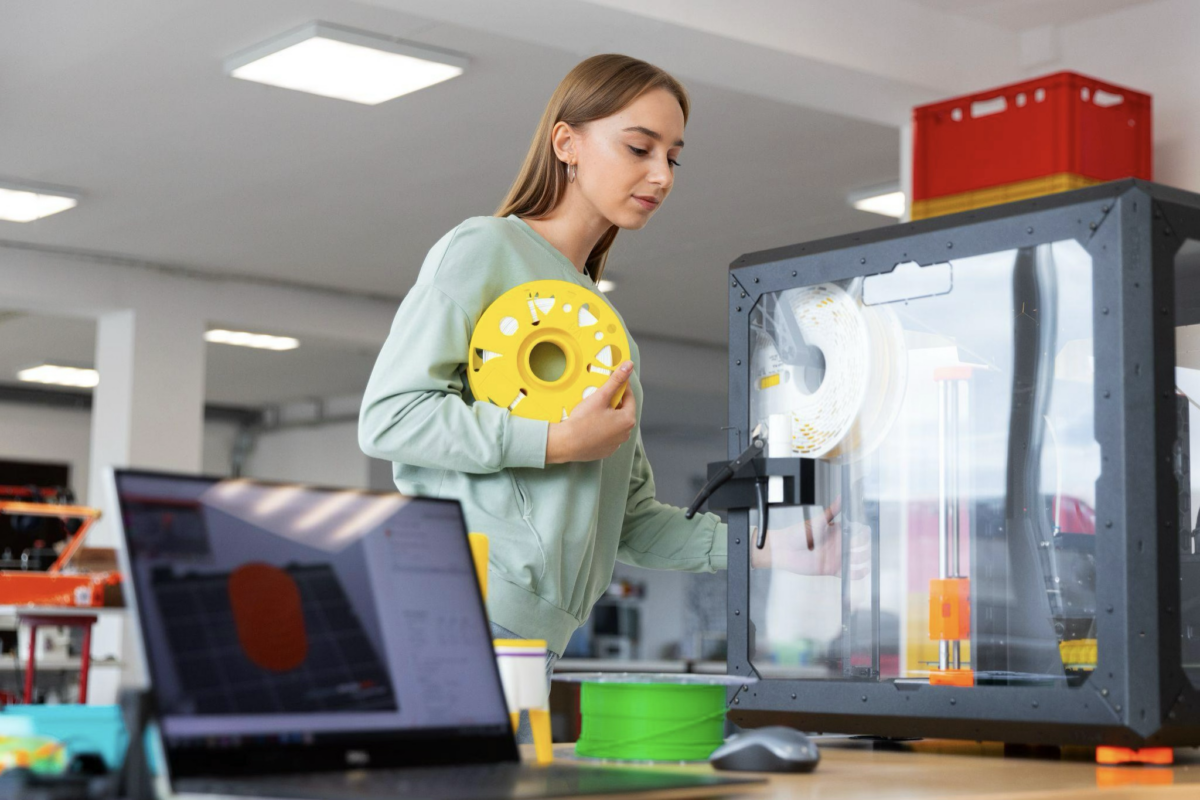
Today’s customers expect products that fit their personal needs, style, and preferences more than ever before. This growing demand is pushing companies to move beyond one-size-fits-all production. Advanced technology is making that possible by helping businesses create customized products faster, smarter, and with greater accuracy.
Tools like 3D printing, automation, digital design, and AI-driven systems are changing the way products are developed and delivered. Instead of long production cycles and limited options, companies can now offer more flexibility and personalization at scale.
As technology continues to improve, product customization is becoming a major part of modern manufacturing and customer experience.
The Real Breakthroughs in Product Customization Technology
These aren’t theoretical concepts sitting in a research paper somewhere. These tools are live, deployed, and actively changing how products get conceived, manufactured, and delivered.
Digital Manufacturing: Where Modern Personalization Begins
Think about how long it used to take to move a product idea from a napkin sketch to a physical object. CAD/CAM software, design automation tools, and digital thread pipelines have collapsed that timeline dramatically.
Adidas and Align Technology didn’t become personalization leaders by accident; they built digital manufacturing pipelines that let them iterate fast and kill bad ideas early, before those ideas cost real money.
Here’s where it gets relevant to your operation: when you need fast-turnaround custom parts that actually hold tolerance, RapidMade online 3d printing is the kind of capability that engineering and product teams lean on, spanning industries from aerospace to medical devices where precision isn’t negotiable.
AI-Driven Product Personalization Solutions
Digital manufacturing gives you the pipeline. AI tells you what to put through it. Machine learning engines dig into purchase history, browsing patterns, and real-time feedback loops, and they surface what individual customers actually want, before those customers can fully articulate it themselves. Intelligent configurators and chatbots make the buying journey feel guided, not overwhelming.
That’s the quiet power of AI-driven personalization. It removes friction at exactly the moment customers might abandon a complicated custom order.
Mass Customization Platforms: Putting Control in Customer Hands
Once AI decodes preferences at scale, the next logical step is giving customers the steering wheel. Nike By You did it with sneakers. Custom jewelry platforms did it with fine goods. Cloud-based design interfaces have made this accessible, not just for giants with massive dev budgets, but for mid-market companies that are willing to invest thoughtfully.
Advanced Tech in Manufacturing: Where Innovation Hits the Floor
Concepts matter. But where things genuinely get exciting is watching these ideas play out on the production floor.
3D Printing and On-Demand Production
Additive manufacturing rewrote the economics of short-run production. One-off prototypes, geometrically wild custom parts, small-batch specialized components, none of these require expensive tooling anymore. And materials have come a long way. Flexible TPU. High-strength titanium. The use cases have expanded well beyond basic plastic prototypes into serious production applications.
Smart Factories and IoT Integration
A connected factory doesn’t just run faster, it thinks faster. Sensor networks and real-time quality inspection mean that a change in your CAD file doesn’t require a line shutdown. It just flows through. That responsiveness is what makes true customization viable at scale, rather than a logistical headache.
Robotics and the New Reality of Customization Trends 2026
Flexible robotic arms handle precision assembly work at speeds humans simply can’t sustain consistently. But the more interesting development is collaborative robots, “cobots”, that make batch-size-one production genuinely scalable. A decade ago, producing a single fully customized unit on a production line was practically a fantasy. Today, it’s a strategy.
Emerging Trends Shaping Customization in 2026
The manufacturing infrastructure is catching up. Now the trends are pushing personalization further into customer-first territory.
Sustainable Product Personalization Solutions
On-demand production reduces overstock waste by design. But sustainability-forward businesses are pushing further, with eco-friendly materials, circular design principles, and energy-efficient production runs. This isn’t just good optics anymore. Conscious consumers are making purchasing decisions based on it.
Direct-to-Consumer Models and Customer Co-Creation
There’s something genuinely compelling about letting your customer be part of the design process. Crowdsourced design, interactive prototyping sessions, and co-creation platforms are growing fast. Some brands are even using blockchain to authenticate personalized products, creating a provenance trail that builds real trust.
AR and VR: Raising the Bar for Customization Experiences
Augmented reality lets shoppers visualize a custom product finish in their actual environment, before they’ve committed to buying. Virtual try-ons in eyewear and fashion are cutting return rates while quietly pushing conversions higher. When a customer can see exactly what they’re ordering, hesitation drops.
Strategies to Actually Leverage Customization Technology
Trend awareness is table stakes. Here’s where the real competitive edge lives.
Using Customer Data to Drive Deeper Personalization
Unified data, CRM, eCommerce behavior, and service interactions give you a fuller picture of your customer than any single touchpoint ever could. That depth produces smarter personalization decisions. And when you pair it with transparent, privacy-forward data practices, you build the kind of trust that converts one-time buyers into long-term relationships.
Companies that master personalization can increase their growth rates by 6% to 10%. That’s not a rounding error. For most businesses, that’s a category-defining difference.
Building Operations That Can Actually Keep Up
Personalization promises fall apart when operations can’t execute. Modular product architecture and digital twins let you simulate changes before committing real resources. That’s the kind of operational agility that separates market leaders from companies perpetually playing catch-up.
Knowing When to Partner With Customization Tech Specialists
BMW didn’t build every piece of its bespoke configuration capability in-house. Smart brands know when internal development makes sense, and when a technology partnership gets you there faster and better. That judgment is itself a competitive skill.
Frequently Asked Questions
Which technology allows manufacturers to produce customized products on demand?
3D printing and CNC machining lead here; both enable precise, custom production without large runs or expensive tooling commitments.
What are the four types of customization?
Collaborative, adaptive, cosmetic, and transparent. Examining each helps managers identify which approach fits their specific customer relationships and product complexity.
Which industries see the strongest returns from customization technology?
Medical devices, automotive, fashion, and consumer electronics. High consumer expectations combined with complex production needs, that’s exactly where advanced tech delivers the most measurable value.
Where This All Goes From Here
Technology isn’t just improving advanced tech in manufacturing; it’s rewriting the rules entirely. AI-driven design, on-demand 3D printing, AR-powered purchase experiences, the infrastructure for delivering genuinely personalized products at scale is more accessible than most businesses realize. The competitive advantage belongs to whoever moves first. Waiting for the “perfect moment” to explore your customization stack is a strategy, just not a great one. Start mapping what the right approach looks like for your business. The window is open. Use it.
