
We are currently living through a period of peak digital noise. As generative tools flood the internet with an unprecedented volume of information, a new user experience challenge has emerged: Cognitive Fatigue. Have you ever started reading an article that was technically perfect, yet found your eyes glazing over after two paragraphs?
This is the “AI Readability Gap”, a phenomenon where the lack of natural linguistic rhythm makes it harder for the human brain to process and retain information.
The Science of “Machine Monotony”
Human communication is inherently rhythmic. We use short, punchy sentences to create urgency and longer, flowing clauses to build nuance. This “burstiness” acts as a roadmap for the reader’s brain, signaling what is important and what is secondary.
Standard AI outputs, however, often favor a flattened, high-probability structure. While this makes the text “correct,” it also makes it monotonous. For digital platforms, this monotony is a silent killer of engagement. When you fail to humanize ai content, you aren’t just missing a creative mark; you are increasing the mental effort required for your audience to consume your message.
Strategic Refinement: The Missing Link in the Tool Stack
For developers and content strategists, the goal is to bridge this gap without losing the efficiency of automation. This is where specialised platforms like humanize.io provide a critical service. Instead of a simple “spin” of the text, the objective is to re-inject the stylistic markers that our brains associate with trust and authority.
By adjusting the “texture” of the prose, these tools allow creators to:
Restore Narrative Flow: Breaking the robotic cadence to mimic natural human speech.
Optimize for Retention: Creating a rhythmic structure that guides the reader through complex ideas.
Build Authentic Authority: Ensuring the tone aligns with the specific expertise of the brand.
Beyond the Algorithm: A Quality-First Framework
As we move toward a more automated web, the value of a “Humanized” output will only increase. A robust workflow for 2026 isn’t just about generation, it’s about Auditing and Polishing.
The Audit: Using an AI checker to identify sections where the linguistic entropy is too low (i.e., too predictable).
The Polish: Utilizing humanize.io to deconstruct those rigid blocks and rebuild them into a resonant, human-centric narrative.
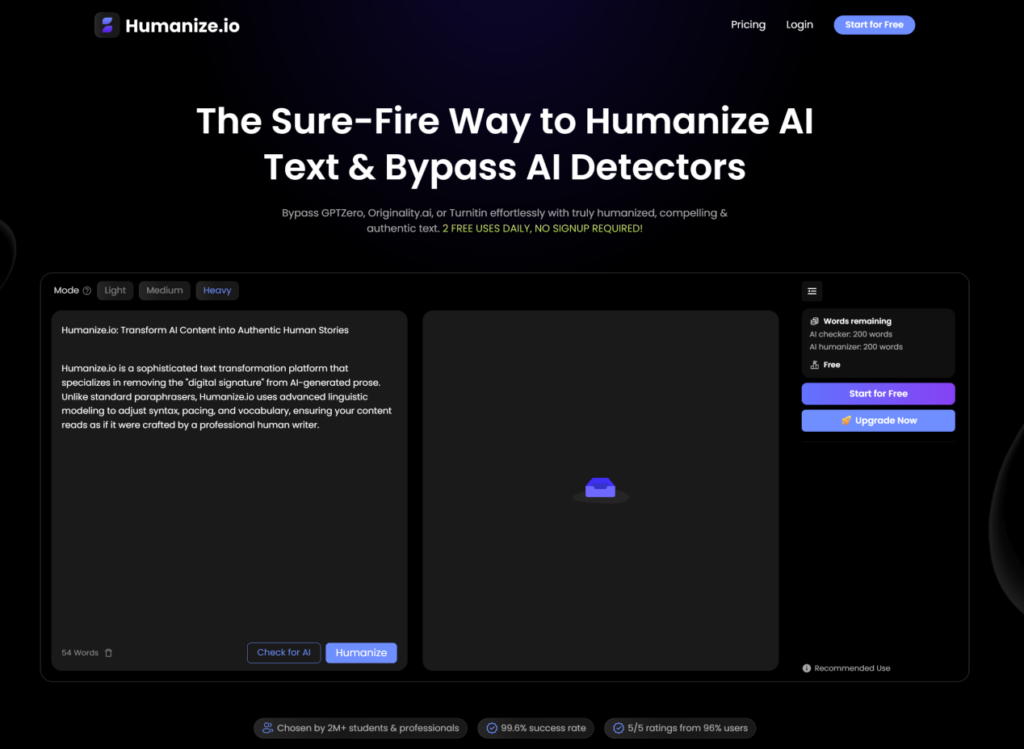
Step 1: Paste your AI-generated draft into the interface.
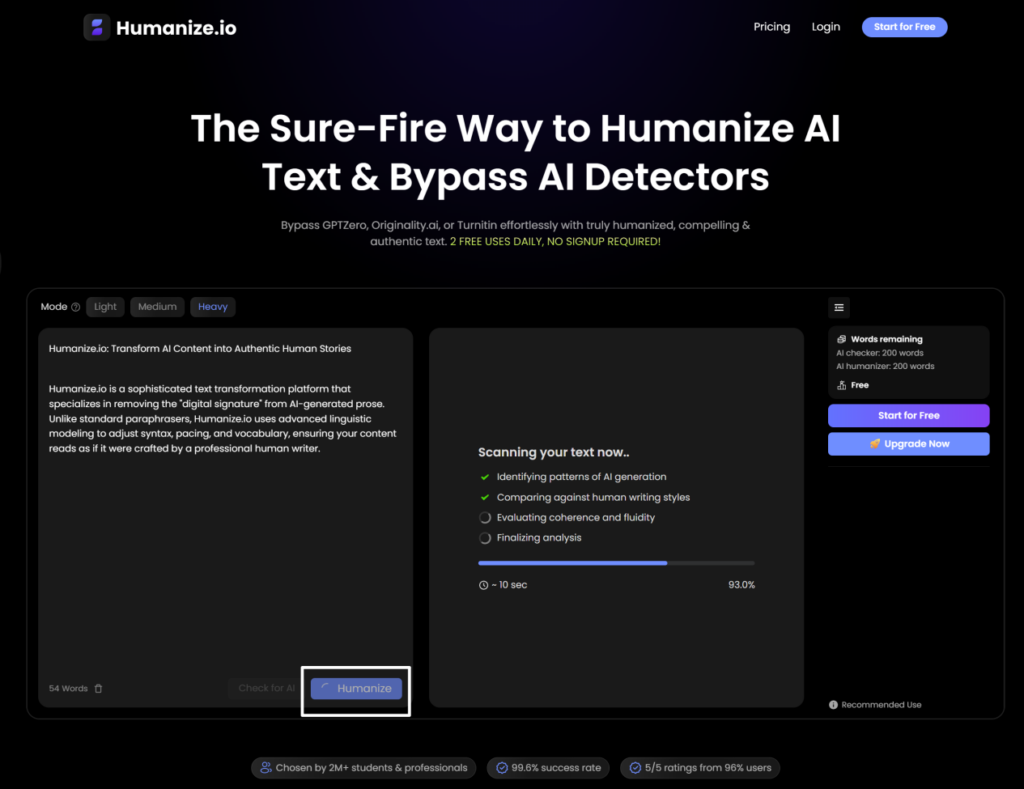
Step 2: Select the “Humanize” mode to trigger the advanced linguistic engine.
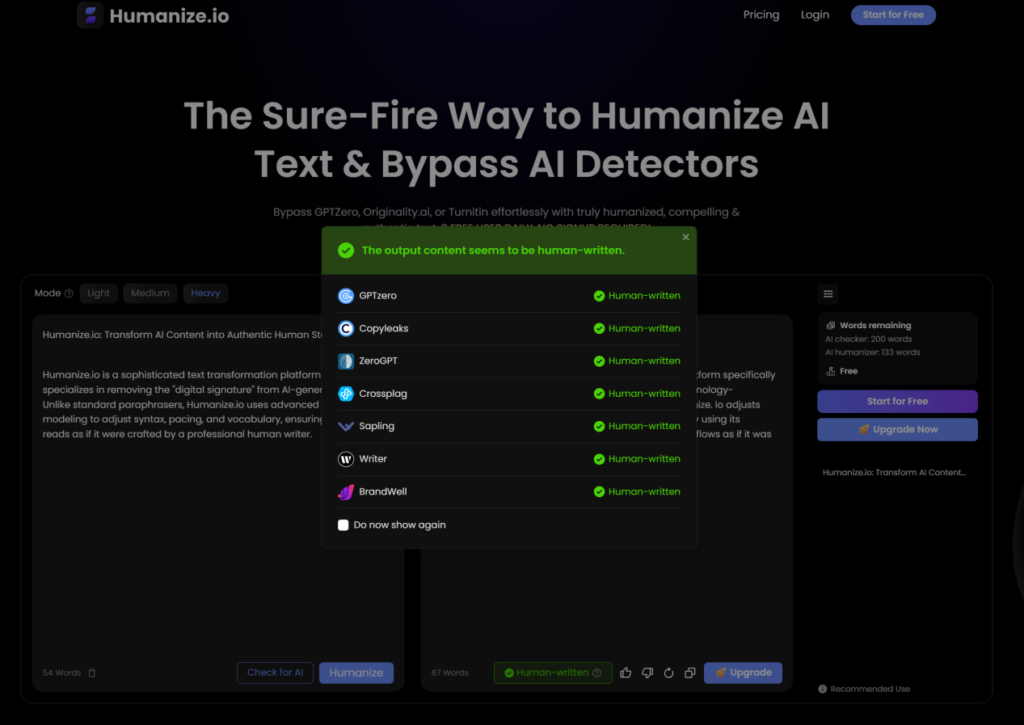
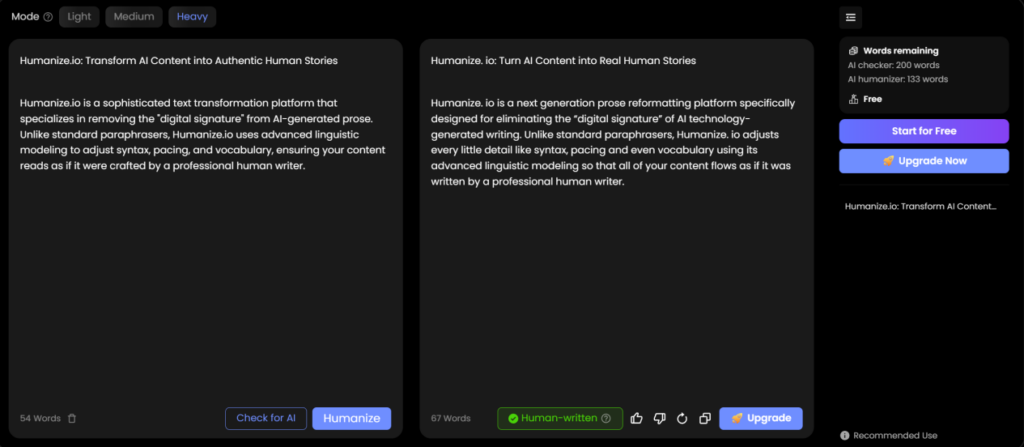
Step 3: Review the output. You’ll notice the “robotic” patterns are gone, replaced by a more natural, engaging tone that preserves your original intent.
The tools we use define the impact we have. While AI can build the skeleton of our ideas, it is the stylistic nuance that provides the soul. In an increasingly crowded digital landscape, the most successful tools won’t be the ones that produce the most content, but the ones that produce the most connective content. By prioritising the psychology of the reader, we ensure that our digital presence remains not just visible, but truly felt.
