Binance Coin (BNB) is a digital currency based on the Binance Smart Chain (BSC). It is a blockchain platform created by the popular cryptocurrency exchange Binance. BNB serves as the native cryptocurrency of the Binance ecosystem and is used for various purposes within the platform.
Binance is one of the largest exchange platforms nowadays. It provides a range of services for investors and traders. It provides a safe and effective platform for the exchange of different cryptocurrencies. Along with many others, it contains Bitcoin and Ethereum.
An Initial Coin Offering (ICO) was used to introduce Binance Coin in 2017. BNB was developed as an ERC-20 token. But, with the introduction of the Binance Smart Chain, BNB migrated to its own blockchain.
The coin serves many functions within the Binance ecosystem, for example, facilitating transaction fees and participating in token sales on Binance Launchpad. It also accesses various Binance products and services, even as a payment form within selected merchants.
BNB Performance Analysis
BNB is the cryptocurrency created by the Binance platform. The platform is popular for its exchanges, for example, BNB to BUSD trading. It has experienced significant price volatility since its launch in 2017. The coin reached an all-time high of over $660 in May 2021. Yet, since then, it has fallen back to around $245 as of July 2023.
Many factors have influenced the price of the coin. It includes market demand and adoption, the Binance ecosystem, and the regulatory environment.
Market demand and adoption
The price of the coin is driven by market demand and adoption. The Binance exchange has become highly popular these days. It, in turn, increased the demand for its coins. The coin is also used to pay for trading fees on Binance, which further drives demand.
Binance ecosystem and services
The Binance ecosystem and services also influence the price of coins. The Binance Smart Chain (BSC) is a popular blockchain platform for decentralized finance (DeFi) applications, and BNB is the native token of the BSC. This gives the coin several use cases, which helps to support its price.
The regulatory environment and news events
The regulatory environment and news events can also influence the price of BNB. For example, a negative regulatory news event surrounding cryptocurrencies could lead to a BNB and other cryptocurrencies sell-off.
Price Prediction Models
Technical analysis of BNB suggests that the coin is currently in a consolidation phase. The price has changed between $220 and $250 in a few months. The coin may continue to merge in this range for some time. But, if the price breaks above $250, it could start a new bull run.
Fundamental analysis of the coin suggests that the coin has the potential to continue to grow. The Binance exchange is still growing in popularity. The Binance Smart Chain is a popular blockchain platform for decentralized finance applications. It allows LTC to BNB exchange and many others. This gives the coin many use cases, which helps to support its price.
Risks and Considerations
Investing involves exposure to market volatility and price fluctuations. Cryptocurrencies, including BNB, have a history of experiencing significant price swings. It can impact investment returns.
Cryptocurrencies’ regulatory landscape is evolving and can pose risks to coin investors. Changes in regulations or legal actions by governments may impact the use, trading, and value of BNB.
The cryptocurrency market is competitive, with many alternatives to coins available. Technological advancements and the emergence of new cryptocurrencies can affect BNB’s market position and potential profitability.
Final Thoughts
Investing in BNB carries both potential profitability and risks. The price of BNB is subject to market volatility and regulatory uncertainties. Additionally, competition and technological advancements can impact its performance. It is crucial for investors to assess these factors. It will help them make informed decisions based on risk tolerance and market analysis.
Disclaimer
This article does not offer or endorse investment advice. It provides educational insights into BNB’s potential but does not suggest any specific actions. Cryptocurrency investments involve risks; readers should consult financial professionals before making decisions.
When starting to build a Magento online store, you’ll face a necessity to choose between its three editions:
A free Magento Open Source version.
Magento Commerce offering official Magento support and implying paying the platform usage fee.
Magento Commerce Cloud, which is a cloud-based eCommerce platform hosted by Amazon Web Services.
Despite being the simplest option, Magento Open Source is the best choice for those who run small to medium-sized businesses. The platform offers great flexibility and substantial customization, enabling you to add new features via various extensions. The article describes Magento Open Source in detail and considers all its key features and benefits.
What Is Magento Open Source?
Magento Open Source is a free, open-source eCommerce software. Originally cooked up back in 2008, it quickly caught on and has since become a powerhouse for those looking to set up online shops without breaking the bank.
You may build a one-of-a-kind, customizable web store using the Magento Open Source version. It helps create the right appearance, feel, and functionality of your store to match your brand, thanks to the extensive selection of Magento extensions. The Magento Open Source platform also includes strict security controls that guarantee PCI compliance and safeguard customer data.
Yet, Setting it up might require diving into some technical territory. All in all, Magento Open Source is perfect for those who have a knack for the technical side of things or have the resources for tailored Magento development services.
Magento Open Source Features
Open Source Magento is well known for its rich functionality and excellent customizability, making it ideal for managing and scaling online operations for small enterprises. Let’s look at some of the most important features:
Catalog Management
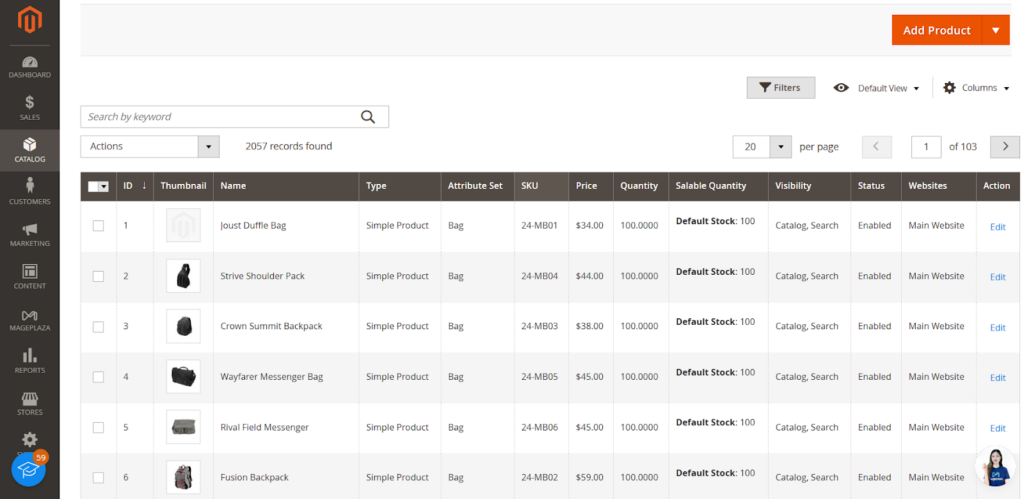
Magento’s Catalog Management is like your librarian – always on hand to organize and categorize products. With its robust catalog management system, Magento can accommodate almost any product, from basic, single items to more complex grouped, packaged, and even virtual ones. It lets you set up products in a snap, group them together, and even add unique attributes. A Catalog system can assist businesses with inventory by handling an infinite number of goods. Among other Magento Open Source Capabilities:
To distinguish products, develop product characteristics and attribute sets;
Establish a hierarchy of categories and subcategories;
Obtain alerts when stock levels are low;
Create galleries with several images for each product you upload;
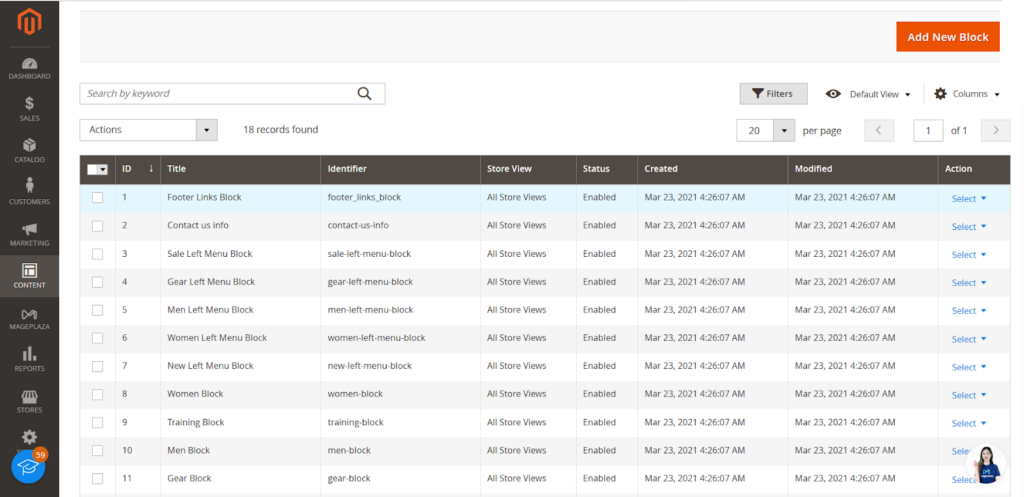
Want to switch things up with a different theme for a seasonal vibe? Or maybe run several stores with varying looks? This feature is covered. With the help of site administration features offered by Magento 2 Open Source, eCommerce businesses can efficiently manage and maintain their online stores. It enables you to personalize the storefront to reflect your company’s identity and offer a distinctive customer experience. Manage numerous online stores from a single admin panel and easily adjust a store’s layout and design.
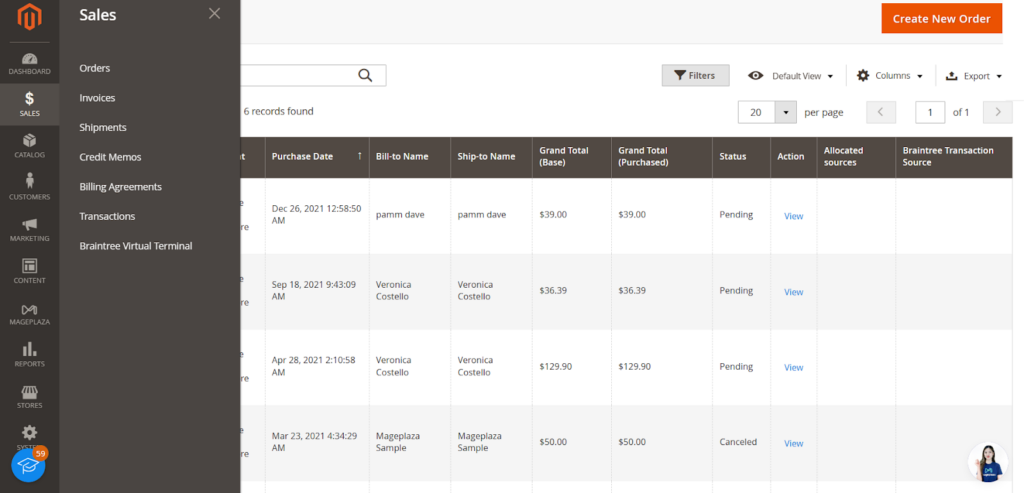
Customers may enjoy a flawless and practical buying experience with the help of a variety of checkout, payment, and shipping services offered by Magento 2 Open Source. You will be able to provide a variety of shipping and payment choices. In addition, Magento Open Source enables the setting of custom shipping limitations and regulations. What else do you get:
To assist eCommerce companies in providing exceptional support and guarantee customer satisfaction, Magento 2 Open Source offers a number of customer care capabilities. These functions are intended to improve communication, respond to client questions, and efficiently handle problems. For instance, it allows the creation of a knowledge base, gives the ability to reply to client emails directly from the admin panel, and sends automated email alerts to customers on order status changes.
SEO
Meta titles, meta descriptions, and other metadata can be set up at the product level, or templates can be made to update product metadata with placeholders automatically. Additionally, it supports canonical URLs, which stop search engines from indexing duplicate URLs. All goods come with structured data markups by default. By giving search engines access to this information, they may enhance product listings on search engine results pages.
Having doubts about how to leverage Magento standard functionality to rank highly in Google Search Results? Have no worries. Most Magendo web development agencies have a standard SEO punch-list they implement to ensure maximum search results visibility.
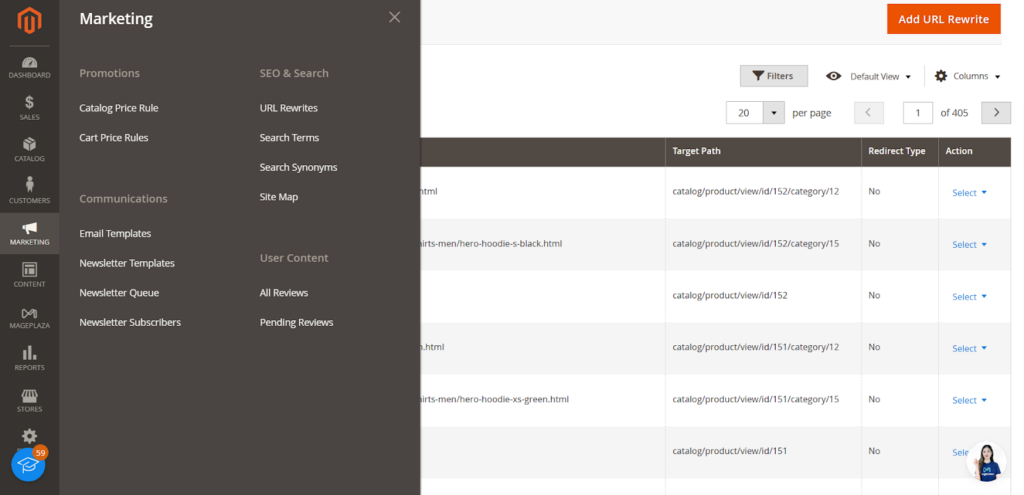
Magento businesses may offer intricate promotions with pricing rules implemented at the catalog and cart levels. Since these are catalog-level triggers, no discount codes are necessary to activate them. You may enact discounts and alter the pricing of goods in the shop catalog using established rule parameters like clientele groups, product categories, color, size, or any store feature.
Analytics and Reporting
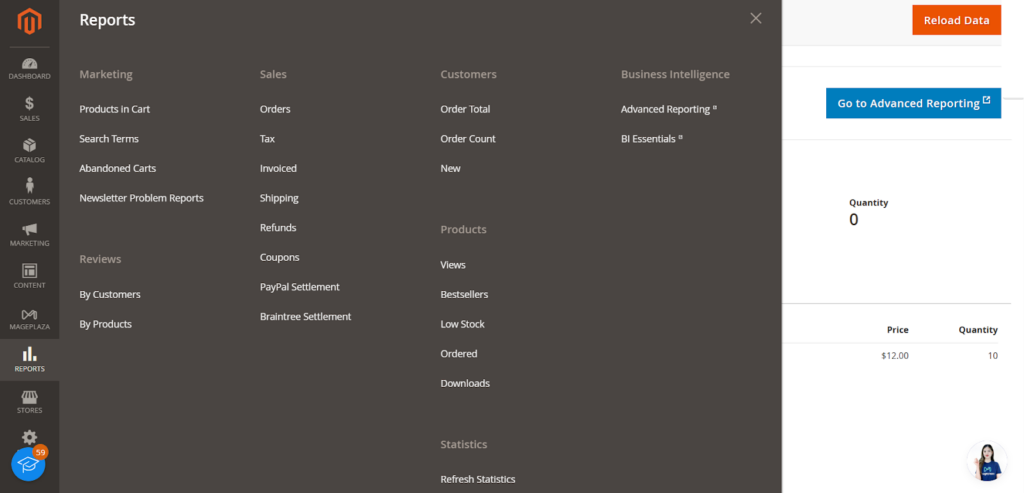
The analytics and reporting capabilities provided by Magento 2 Open Source enable eCommerce companies to learn more about their performance, client behavior, inventory, third-party integrations efficiency, sales and general eCommerce trends, etc. This data helps make decisions, adjust tactics, and foster business prosperity.
Through its open-source GitHub project known as the Magento PWA Studio, Magento allows the development of PWA websites. The tools included in this project make it easier to create, launch, and maintain a PWA store on top of a Magento store. PWA websites may function offline and are safe, quick, and responsive.
Benefits of Magento Open Source
Now that you know the main features of Magento Open Source, let’s have a look at its benefits compared to other iterations of Magento 2 and eCommerce software.
Price
Magento Open Source is entirely free. This is only one factor that makes this version so well-liked among companies. The development community also provides regular updates, and any discovered security holes are instantly fixed. This is what makes Magento Open Source one of the most affordable and secure eCommerce systems that one might employ for their website.
Scalability
By utilizing a Magento Open Source, retailers get access to an extremely scalable eCommerce system. The interfaces and tools offered by Magento are simple to modify as your organization expands. You may also quickly incorporate Magento into your current website or company strategy since it is compatible with different technologies.
Security
Magento websites are protected against potential attacks and malware. Store owners may take advantage of real-time updates, schedule security audits, and resolve security problems easily. The necessary security information can also be obtained from the Magento security center. Store owners may pick up information on updates, security fixes, and best practices. Additionally, Magento may aid retailers in obtaining PCI compliance and SSL certificates.
Customization
Magento Open Source helps customize and alter the software to meet your specific demands. You have complete control over branding and design choices, which gives you a great deal of freedom in making decisions that affect the entire appearance of your store.
Variety of Themes and Extensions
To support the growth of your business, you may integrate various services. All extensions and service providers have undergone careful cross-checking by Adobe to ensure great quality.
You may quickly communicate with a variety of third-party services, such as payment systems, database apps, shipping, order tracking, etc. Additionally, Google technologies like Google Analytics, Google Checkout, and Google Base are integrated into the Magento platform to help you assess the effectiveness of your website.
Community Support
A sizable Magento community of dedicated programmers, webmasters, project managers, product managers, CEOs, and other experts helps and collaborates with everyone seeking assistance daily worldwide.
These teams provide owners with round-the-clock support to help them raise the standard and develop their online platforms. The Magento Community makes certain that everyone is kept up to date. You may always consult the community for the best fixes and advice if your Magento eCommerce website has issues.
Final Word
Despite the multiple valuable features and all the benefits Magento Open Source provides to eCommerce businesses, there are certain limitations you should be aware of, like complexity and certain extension conflicts. Apart from that, while Magento is highly customizable, making deep customizations requires expertise in its structure and coding standards. But even with these drawbacks considered, it’s one of the best options available on the market today.
Do you need help searching the internet for the ideal book? I was disappointed because there were few choices and the prices were high. Look no further! Welcome to Z library, the perfect place for book enthusiasts worldwide. It is the most extensive eBook library worldwide, where you can access millions of eBooks easily. If you are a student searching for educational materials, a professional seeking industry knowledge, or someone who loves reading and wants to find their next great book. Z library has got you covered. Discover various categories, including stories, helpful guides, and life stories. You can easily access everything right from your device. Finding your next excellent book has become even more straightforward thanks to its easy-to-use design and helpful search options. Become part of the millions of users who have already discovered the vast realm of knowledge through Z library. Now is the moment to begin your adventure into reading and uncover a realm full of limitless opportunities.
What Makes Z library The Largest eBook Library In The World?
The phrase “largest eBook library in the world” is more than simply a great advertising gimmick for Z library. With an incredible selection of books spanning every genre and category, it bears up to its name. It contains everything you’re looking for, whether you’re into self-help, memoirs, up-to-date fiction, or perhaps academic materials. Everybody will discover anything on the website because of the staggering amount of eBooks offered there. What distinguishes it from other eBook distribution services, though? Its user-driven concept is one of the primary justifications. Z library depends on its user base to add books to its collection. Therefore creating an extensive collection is a collaborative effort. As a result, there are always new and intriguing titles to find as the library grows and changes.
Popular Genres And Categories On Z library
Z library offers materials for those with various reading tastes and passions. It has stuff for everybody, regardless of whether you enjoy enthralling mysteries, uplifting romance stories, thought-provoking non-fiction, or even academic textbooks. Let’s examine some of the well-liked genres and subcategories available on Z library in more detail.
Fictional eBooks: Enter the captivating realm of fiction, where the possibilities are endless. The platform has many fantasy eBooks, from classic works by well-known writers to modern hits.
Non-Fiction eBook: This category is a goldmine for learning whether you want to deepen your understanding or obtain new perspectives on a topic. It offers a vast selection of non-fiction eBooks to quench your desire for wisdom, ranging from self-help books that provide advice on personal growth and inspiration to biographies that explore the journeys of outstanding people.
Academic Resources: The platform is excellent for learners, scholars, and leisure reading. Its scholarly collection includes books, research papers, and educational articles that may be used whether you’re working toward a degree or want to discover new things. For students who may lack access to traditional libraries or prefer the ease of learning on their chosen devices, having access to these materials is a game-changer.
How To Access And Navigate Z library
Now that you know Z library’s benefits, let’s explore how to use and browse this vast eBook collection. The fact that it can be accessed from every gadget with an internet connection is excellent news. You may browse its collection using a computer, tablet, or mobile device. Utilize your favorite browser to first access the website. When you arrive, a simple, straightforward interface will welcome you and make surfing easy. A search box on the site makes locating particular books, authors, or keywords simple. A different option is to peruse the homepage’s many genres and categories. Z library has a clean, organized layout that pleasures browsing through it.
Your search may be quickly limited because every genre and category is further separated into subcategories. You may locate what you’re searching for without spending time reading through irrelevant titles due to the detailed categorization. When a book catches your attention, tap on its title to get to a page with more information about it. You may discover information about the book’s writer, release date, and reader reviews here. If the book is worthwhile, you may also browse user reviews. If the book fits your requirements, you can obtain it in the format you choose, such as PDF, EPUB, MOBI, or another.
How To Contribute To The eBook Collection Of Z library
The community-driven strategy of Z library has helped it become the most extensive eBook library globally. Unlike conventional libraries, which rely on companies and writers to offer titles, the website allows users to add titles to its eBook collection. This collaborative effort will enable the library to keep growing and provide a wide range of books. You must create an account for free on the platform to publish an eBook. The website accepts reading materials in different formats. It’s important to remember that you must adhere to copyright regulations and confirm that you are legally permitted to distribute eBooks before posting an eBook on the website. Z library is committed to preventing the illegal spreading of copyrighted information and takes infringement of copyright severely.
Tips For Maximizing Your Experience On Z library
Now that you’re prepared to start reading using Z library, here are a few suggestions to assist you in getting the most out of this fantastic tool and getting the most out of your reading experience:
Check user comments: Review user feedback and evaluations before starting another novel. It can provide you with important information about the book’s excellence and assist you in deciding whether it suits your reading habits. Be bold and believe what other readers who have completed the book have to say.
Create a custom reading list: Make customized book lists with Z library to make it simple to keep up with the books you want to devour or suggest to others. Utilize this function to manage your reading objectives and build your online library.
Support Authors: While Z library provides a substantial selection of free eBooks, it’s crucial to remember that writers depend on book sales to support themselves. If you encounter an author on Z library that you adore, consider buying their books or posting reviews on well-known retail websites to show your support. By doing this, you can guarantee that writers can keep producing stories you enjoy.
Conclusion
Z library shines forth as a beacon of light for bookworms in an era where the availability of traditional libraries is declining, and online retailers control the book industry. How we acquire and engage with books has been completely transformed by its enormous library of countless eBooks, intuitive user interface, and robust search features. Whether you’re a student, professional, or voracious reader, Z library puts a world of information and enjoyment just a click away!
As the technological landscape diversifies, the coexistence of open-source and proprietary databases becomes evident. The shift towards open-source models is driven by various factors, be it fostering innovation, advocating for code democracy, or controlling costs. A reflection on these aspects is found in Marc Linster’s webinar, “5 Tenets for 2022 Database Planning”.
Having been a stalwart in the industry for nearly a quarter-century, PostgreSQL is synonymous with reliability and maturity. But while PostgreSQL adoption signifies an open-source commitment, it’s essential to recognize that such freedom necessitates responsible decision-making. A real-world scenario, encountered by the DB Serv Support team, elucidates this perspective.
PostgreSQL Support Services: a DB Serv Customer Experience
DB Serv’s interaction with a client facing sporadic performance issues underscores the significance of PostgreSQL support services. The client, a few months into using DB Serv, reported irregular application performance, oscillating between normal and degraded states without discernible patterns.
While initial suspicion might point towards the database, it’s crucial to assess simpler solutions first. Could external factors, such as host or network issues, be culprits? The client’s SolarWinds monitoring did not indicate substantial issues:
Network usage fluctuated between 35% and a peak of 85%.
Other hosts operated as expected.
The application hosts showcased healthy metrics.
However, intriguingly, the performance bottleneck was observed exclusively when the applications communicated with their PostgreSQL databases. Cached information remained efficient, even during database latency periods. Additionally, the database host’s CPU load reached around 53%, and memory usage maxed out during these intervals.
Diving deeper, it emerged that the client had an older 9.4 PostgreSQL version. Various memory-related issues identified in early 9.4 iterations were addressed in subsequent versions. Probing the installation revealed an unconventional approach—the original DBA had compiled PostgreSQL independently instead of using standard methods, resulting in a patchwork of code and extensions without documented reliability measures.
To alleviate the issue, DB Serv advised transitioning to a clean PostgreSQL installation from the community’s repositories. This shift not only circumvented the original haphazard compilation but also updated the software and streamlined the upgrade process. Post-migration, the erratic behavior ceased, underscoring the importance of a robust and standardized PostgreSQL deployment.
Beyond Mere Insurance: The Essence of PostgreSQL Support Services
Many firms adeptly manage their PostgreSQL deployments, with some even contributing to the broader community. While self-reliance is commendable, the benefits of PostgreSQL support services, offered by vendors like DB Serv, are manifold. Such services allow companies to prioritize their core objectives while ensuring their database’s health and performance.
A proficient PostgreSQL support vendor should:
Facilitate a high-performance, reliable implementation.
Guarantee the usage of robust, enterprise-grade software.
Offer continuous assistance, covering challenges and inquiries.
This holistic approach can circumvent potential pitfalls. For instance, a simple query like, “Should I compile my own source?”, when addressed by experts, can avert potential disasters, as illustrated by the aforementioned case study.
In the client’s journey, an initial oversight culminated in a challenging situation. Yet, a single interaction with DB Serv’s PostgreSQL support services transformed their experience. While DB Serv is one among several providers, its dedication and global footprint set it apart. Engaging a vendor, especially one adept in PostgreSQL support services, is a pivotal step for any organization committed to PostgreSQL.
In the fast-paced and ever-evolving world of hospitality, technology has become an indispensable ally for hoteliers striving to enhance guest experiences, streamline operations, and boost overall efficiency. The hotel industry’s unique demands have paved the way for a plethora of software solutions tailored to cater to every aspect of hotel management. From reservation systems to guest engagement platforms, hotels are harnessing technology to provide exceptional services that leave an indelible mark on their patrons. This article delves into the diverse array of software solutions that have become the backbone of the modern hotel industry.
Revolutionizing Reservations: Hotel Reservation Systems
At the heart of any hotel’s operations lies the hotel reservation system or central reservation system (CRS). This software serves as the nucleus for managing room bookings, availability, and rates. By integrating real-time data, a reservation management system ensures accurate information is relayed to potential guests. This critical tool minimizes the chances of overbooking while maximizing occupancy rates. Hoteliers can conveniently modify room rates and availability, dynamically adapting to market fluctuations. Additionally, many modern reservation systems offer online booking capabilities, empowering guests to reserve rooms seamlessly through a hotel’s website or third-party platforms.
Seamless Guest Experience: Property Management System (PMS)
A well-rounded property management system (PMS) is the lifeline of any hotel’s daily operations. This comprehensive software solution unifies various functions, including front desk management, housekeeping, invoicing, and more. The PMS acts as a central hub where staff can monitor guest check-ins and check-outs, room status, and guest preferences. With a reliable PMS in place, hotels can deliver personalized experiences by noting guests’ preferences and histories, thereby fostering loyalty. Efficient housekeeping coordination is also facilitated, ensuring that rooms are cleaned promptly and are ready for new arrivals.
Financial Precision: Accounting and Bookkeeping Software
The financial aspect of hotel management demands meticulous attention to detail. Accounting and bookkeeping software streamline the complex task of managing revenue, expenses, payroll, and taxes. These software solutions generate accurate financial reports that provide insight into a hotel’s financial health. By integrating with other hotel management systems, such as the PMS and POS systems, accounting software offers a comprehensive overview of the hotel’s financial performance, enabling hoteliers to make informed decisions that can impact profitability positively.
Creating lasting impressions and building guest loyalty are vital goals for any hotel. CRM software aids in cultivating meaningful relationships with guests by capturing and analyzing guest data. By tracking preferences, feedback, and past interactions, hotels can tailor their services to meet individual needs. Personalized offers, loyalty programs, and targeted marketing campaigns can all be managed through CRM systems. This software also assists in post-stay engagement, seeking feedback and addressing any concerns, ultimately enhancing guest satisfaction and increasing the likelihood of return visits.
Navigating Distribution Channels: Channel Management Software
With the rise of online travel agencies (OTAs) and other distribution channels, hotels need to maintain accurate and consistent room availability and pricing across various platforms. This is where channel management software steps in. It provides an integrated solution to manage multiple distribution channels, ensuring that the hotel’s inventory is synchronized in real-time. This minimizes the risk of overbookings and disparities in room rates, offering a seamless booking experience for guests across various platforms.
Elevating Dining Experiences: Point of Sale (POS) Systems
Hotels with dining facilities require efficient ways to manage orders, payments, and inventory. POS systems are designed to streamline the restaurant and bar operations within a hotel. They facilitate order-taking, table management, and payment processing, enabling staff to focus on delivering exceptional dining experiences. Integration with the PMS ensures that restaurant charges are correctly linked to guest accounts, providing a hassle-free checkout process.
Empowering Staff: Workforce Management Software
Behind the scenes, an efficient hotel relies on a well-managed workforce. Workforce management software enables hoteliers to schedule staff shifts, track attendance, and manage labor costs effectively. By aligning staffing levels with occupancy rates and peak periods, hotels can optimize resource allocation, ensuring smooth operations without unnecessary labor expenses.
Secure Access Control: Key Card Systems
In the digital age, traditional metal keys are being replaced by key card systems that enhance security and convenience. These systems use electronic key cards equipped with RFID technology to grant access to guest rooms and other secure areas. Key card systems offer flexibility in assigning access privileges and enable swift deactivation in case of loss or checkout. Additionally, they provide insights into guest movements, contributing to overall security and operational efficiency.
Seamless Communication: Unified Communication Systems
In the interconnected world of hospitality, effective communication is paramount. Unified communication systems bridge the gap between various departments within a hotel, ensuring a seamless exchange of information. These systems integrate messaging, voice communication, and video conferencing, enabling staff to collaborate effortlessly. For instance, housekeeping can promptly communicate room availability to the front desk, facilitating quicker check-ins for arriving guests. This real-time communication not only enhances operational efficiency but also contributes to guest satisfaction by minimizing delays and misunderstandings.
Data-Driven Insights: Business Intelligence and Analytics
In the data-driven era, extracting meaningful insights from the massive amounts of information generated by hotels is invaluable. Business intelligence and analytics software provide the tools necessary to analyze data collected from various systems, such as PMS, CRM, and POS. These insights offer valuable perspectives on guest preferences, spending patterns, and trends, allowing hoteliers to make informed decisions that drive revenue and operational improvements. By identifying opportunities for upselling, optimizing pricing strategies, and tailoring marketing campaigns, hotels can continuously adapt to evolving market dynamics.
As the curtains draw on this exploration of essential software solutions in the hotel industry, it becomes evident that technology has etched its mark deeply within the sector. The amalgamation of reservation management systems, property management systems, and an array of other software tools has revolutionized the way hotels operate and engage with guests. The symbiotic relationship between hospitality and technology is no longer a novelty but a necessity that shapes the present and future of the industry.
In this era of heightened guest expectations and dynamic market landscapes, hotels must harness technology’s power to provide memorable experiences that resonate with each guest. From the initial touchpoint of a reservation to the final farewell, every interaction can be enhanced and tailored through the intelligent application of software solutions. The modern traveler seeks not just accommodation but an immersive journey, and technology serves as the compass that guides them through a seamless and unforgettable stay.
In closing, the horizon of the hotel industry stretches wide with the opportunities that technology presents. It is a horizon where personalized services, operational efficiencies, and data-driven insights converge to create an ecosystem that thrives on innovation. By embracing the software solutions detailed above, hotels stand poised to embrace the challenges and possibilities of the future, turning each stay into a masterpiece and setting new standards for hospitality excellence. As technology continues to evolve, the hotel industry must remain at the forefront, continuously reimagining its methods to meet the ever-evolving expectations of guests and charting a course toward a new era of unparalleled hospitality.
Data security is essential for business longevity. Most contemporary businesses collect, store, and utilize user data to improve ad campaigns, personalize services, or predict quarter revenue. According to IBM’s statistics, failure to protect business-sensitive information amounts to up to ten million dollars in losses and long-lasting reputational harm.
Humans cause most cyber incidents. Whether using a weak password or downloading an infected email attachment, they take unnecessary risks with dire consequences. This article provides brief but effective tips on securing sensitive data in the workplace.
1. Data Access Control
Sensitive business data should not be available to all employees. There’s no need for graphic designers to access user payment details, and it’s the job of a network security administrator to distribute access privileges. Segmenting databases and restricting access to most confidential secrets only to the selected few is best.
Remember that data is accessed via applications, like CRM tools, which means restricting access is often done on the app level. A dedicated business password manager allows for setting strong and unique passwords per application and monitoring access privileges. Credentials are assigned to responsible employees and restrict others from accessing sensitive information.
2. Data Encryption
Data encryption is paramount to online security. Before advanced encryption algorithms, online data flow was plain text for everyone to see. A hacker with minimal coding knowledge and an online surveillance tool could easily glimpse at private conversations. Online financial transactions would be impossible without encryption because the payment details would be exposed to malicious actors.
You are inviting trouble if you don’t encrypt sensitive business information. Firstly, lawful regulations like GDPR require businesses to encrypt user data or face hefty fines. You must ensure the clients’ names, social security numbers, payment details, etc., are encrypted. If hackers find such information in plain text, they can immediately use it for other malicious scams putting your customers at risk.
Firstly, we recommend encrypting data at rest. The Windows operating system has an in-built BitLocker feature that encrypts the whole drive. However, you can use third-party Cloud servers that include data encryption in their services to save funds on developing your own expensive structure. VPNs handle data-in-transit encryption – our third information security tip.
3. Virtual Private Network
VPN is a privacy-protection-oriented cybersecurity software. Microsoft developed VPNs to ensure safe remote access to business intranets. As you might’ve guessed, VPNs became popular during the Covid-19 lockdowns when most employees had to work from home. Hackers quickly shifted attention to unsecured home networks, exploiting the lack of cybersecurity protocols to attack a remote business network.
A VPN opens a secure and encrypted tunnel between the user’s device and the target destination. In this case, it will encrypt all data flow between remote employee devices and the business intranet, protecting it from threats like online surveillance and Man-in-the-middle attacks. All remote employees must know how to use a VPN when handling sensitive business information. Without it, criminals can intercept the communication, steal confidential user data, or modify it to inject a virus.
4. Employee Training
Your cybersecurity system is as strong as its weakest link. Even the most expensive firewall will not save you if your employees use ‘qwerty123’ to protect online accounts or browse virus-infected sites on work devices.
We recommend doing regular onsite cybersecurity training that includes:
Employees will learn essential online safety tips to feel more comfortable at work. Lastly, test their knowledge by simulating a cyber attack, like sending an internal phishing email to notice workers that have not yet learned to identify them.
Last Words
Large corporations can spend millions of dollars on secure server structures, but securing it for small-to-mid businesses is not that costly. Remember that most criminals look for the easiest target, so they will switch attention if they notice at least the basic data safety protection software. The solutions above are excellent for growing businesses to neutralize the most common data-related cyber threats.
Node.js is an open-source runtime environment constructed on Chrome’s V8 JavaScript engine. Conceived in 2009 by Ryan Dahl at the European JSConf, it gained instant acclaim as the most captivating advancement in the JavaScript domain.
Under the patronage of Joyent, a firm known for backing technologies like Ruby on Rails and hosting giants like Twitter and LinkedIn, Node.js blossomed. Notably, LinkedIn was among the first to adopt Node.js for its mobile app backend. Following suit were tech stalwarts like Uber, eBay, Walmart, and Netflix. Yet, it was only around 2017 that the broader adoption of this technology truly began.
Node.js isn’t a framework. Instead, it’s a runtime environment that interfaces with the operating system, executing code based on the V8 engine originally crafted for Chrome. Its capacity to run server-side JavaScript through just-in-time compilation is notable. Though some mistakenly label it a framework, it’s distinct in its purpose. Frameworks are tools aiding speedy development, whereas Node.js stands as the base. However, node.js web development services developers have access to many frameworks tailored for Node.js, including Express, Meteor, and Sails.
Node.js: The Highs
Technological Robustness: JavaScript’s dominance paved the way for Node.js to rise as a significant player. Adopted by numerous websites, it offers the merits of full-stack JavaScript development like improved efficiency, code reuse, rapid performance, knowledge-sharing, and access to myriad tools. The outcome? Agile teams and efficient software.
Swift Web-task Processing: Node.js’s speed isn’t folklore. Comparative tests show it excelling in handling concurrent requests, attributable to the V8 engine’s rapid JavaScript-to-machine code compilation, a product of Google’s robust investments.
Scalability via Microservices: Node.js’s lightweight nature makes it apt for microservice architectures—developing applications as a suite of small, distinct services. This modular approach fosters flexibility and scalability.
Expansive Developer Community: In 2023, Node.js emerged as a top pick among web technologies, with a considerable chunk of StackOverflow’s community endorsing it. The standout framework in this realm is Angular https://www.aimprosoft.com/technologies/angular-development/.
Node.js: The Lows
One of Node.js’s most pronounced weaknesses is its inability to efficiently handle tasks that demand significant CPU power. This limitation is rooted in the very design of JavaScript. Originally conceived as a frontend language, JavaScript operates on a single-threaded model. This design choice, while ensuring rapid task execution, particularly in frontend operations where multi-threading isn’t typically essential, becomes a hindrance when it comes to backend tasks that could benefit from concurrent processing.
Limitations with Intensive CPU Tasks: Node.js’s Achilles heel remains its sluggish processing of CPU-intensive tasks. This limitation stems from JavaScript’s design, which, being a frontend language, uses a single thread for swift task execution without requiring threading.
The Callback Conundrum: Node.js’s asynchronous nature leans on callbacks, leading to “callback hell”—a messy, nested structure of callbacks making code harder to comprehend and maintain.
Tooling and Dependency Concerns: While core Node.js modules are stable, numerous tools in the npm registry are either inadequately documented or of questionable quality. The registry’s structure lacks a comprehensive rating system, making it tough for developers to pinpoint top-tier tools.
In conclusion, while Node.js presents promising capabilities, understanding its constraints is crucial for leveraging its full potential.
In today’s fast-paced world, taking care of one’s health often takes a backseat, especially for busy college students. Between rigorous academic schedules, social obligations, and personal chores, maintaining a well-rounded lifestyle can seem like a herculean task. But, what if we told you that you could manage your health and productivity efficiently, right from your smartphone?
Welcome to the world of HealthTech apps – a booming sector that combines healthcare and technology to help individuals maintain their well-being. From meditation to diet tracking, these apps are designed to help you manage your physical and mental health while improving your productivity as well. Even if you’re consumed with writing that term paper or choosing an essay helper from Essaypro, there’s an app that can help you handle your health needs efficiently. And the beauty of it is that they’re all just a few taps away.
Mental Health Apps
Stress and Anxiety Management Apps
Stress and anxiety are common among students due to the pressures of college life. Thankfully, several apps are specifically designed to help manage these conditions. Apps like ‘Calm’ and ‘Headspace’ provide various mindfulness exercises and guided meditations that can help you relax and cope with stress. Using these apps regularly can reduce anxiety, improve mood, and promote overall mental wellness.
Mindfulness and Meditation Apps
Mindfulness and meditation are scientifically proven to improve mental health. Apps such as ‘Insight Timer’ and ‘Smiling Mind’ offer a variety of mindfulness practices and guided meditations tailored for different purposes – sleep, stress relief, focus, and more. Regular use of these apps can help enhance your concentration, encourage positive thinking, and even improve sleep.
Physical Fitness Apps
Workout and Exercise Apps
Fitness is more than just a trend; it’s a lifestyle. But for a college student, going to a gym might not always be feasible. This is where fitness apps like ‘MyFitnessPal’ and ‘7 Minute Workout’ come into play. These apps provide personalized workout plans that you can do in your dorm room or anywhere convenient. You can monitor your progress and stay motivated to achieve your fitness goals.
Nutrition and Diet Tracking Apps
Maintaining a balanced diet can be a challenge, especially with the tempting options available on campus. But with apps like ‘MyPlate’ and ‘Lifesum,’ you can track your food intake, measure calories, and receive customized diet plans. This way, you’ll make more informed choices about what you eat and ensure a balanced and nutritious diet.
Sleep Monitoring Apps
The importance of sleep for students cannot be overstated. It affects your learning, memory, mood, and overall health. Apps like ‘SleepCycle’ and ‘SleepScore’ can help monitor your sleep patterns, provide insights into your sleep quality, and offer tips for better sleep.
Study and Productivity Apps
Time Management and Organization Apps
As you juggle various tasks, managing your time effectively becomes crucial. Apps like ‘Google Calendar’ and ‘Todoist’ can help you organize your tasks, set reminders for deadlines, and efficiently plan your day. This is even more important when working on significant projects like dissertations, where the best assignment writing services could be one of the resources you might consider.
Focus and Concentration Enhancing Apps
Distractions are everywhere, but some apps can help you stay focused. ‘Forest’ and ‘Focus Keeper’ use various techniques to keep you concentrated on your tasks. These apps work on the principle of rewarding users for not getting distracted, thereby training your brain to focus better.
Telemedicine Apps
Telemedicine is a game-changer, especially in the current pandemic situation. Apps like ‘Teladoc’ and ‘MDLIVE’ allow you to consult with healthcare professionals virtually. Whether you need urgent medical advice or a regular check-up, these apps make it easy and convenient.
Conclusion
In conclusion, HealthTech apps can make a significant difference in managing your health and productivity as a student. These tools offer easy and convenient ways to look after your physical fitness, mental health, sleep, and even help with time management and focus. While these apps are not a replacement for professional medical advice or services, they serve as excellent resources to help you maintain a balanced lifestyle during your college years. So, go ahead and give these apps a try, and experience the transformation in your health and productivity.
Remote work comes with an impressive list of benefits and pros. However, improved cyber security is not one of them. While we all love the option of not having to commute to work every day, we can’t forget about the importance of staying safe and ensuring privacy while working remotely.
This task is more complicated than one might think at first glance. While most of us know the cybersecurity basics, like avoiding clicking on phishing emails and keeping our personal data away from strangers online, when you bring work into the mix, the stakes get even higher.
Most of us will have to share sensitive data via email or other channels. If you are a remote worker, chances are you are not always using your home network, which makes you vulnerable to all sorts of cyber attacks and risks that could eventually cost you your job. This is why it’s important to stay vigilant about cybersecurity, even if it seems like it is just a boring extra step added to your daily routine. Below, we’ve outlined some of the most effective yet user-friendly tips for improved cybersecurity for remote workers.
What to Do to Stay Safe While Working Remotely?
Cybersecurity is a complicated topic. However, ensuring you have it doesn’t have to be. Creating safety practices around your digital footprint can take many forms. However, the easiest and most reliable route you can take towards ensuring your cybersecurity is a VPN or a virtual private network.
As we increasingly use the internet to do work and exchange sensitive work files, VPNs will become even more widespread, and for a good reason. For example, where a VPN can help you keep your privacy and secure your files is when you are out of the office and need to send a file to your coworker via public Wi-Fi or are encouraged to use port forwarding for convenience. You won’t always have access to your secure connections and might need to resort to less secure methods. Sending over sensitive data via public Wi-Fi is never a good idea as these are extremely prone to attacks, and you could get caught in the crossfire.
VPNs reroute your connection through a secure tunnel, concealing your browsing history and other personal details from your internet service providers and whoever else may be hunting after that data.
Many people are surprised to learn that their ISP can view everything they’re doing online, even when they use private browser windows. While that within itself is a disturbing fact, what’s even worse is that this data is like gold to marketers and other types of organizations looking to capitalize off of your digital habits in ways that you may find completely unacceptable.
ISPs frequently sell this precious data to the highest bidder, not even looking closely at what these organizations could be planning to do with your data. However, you can avoid that by going online with a VPN to conceal your IP address and other identifiable metrics that can tie your browser history back to you. Keeping your browsing history and digital habits private is just a part of why you must get serious about your cybersecurity.
But you have to be even more careful when it comes to your work files and the information you exchange with your coworkers online. This data can be extremely valuable for certain players like your competitors or just hackers looking for an easy way to blackmail you or the entire company with the threat of leaking sensitive materials to the public. Nobody wants to be responsible for a situation like this, so use a VPN to ensure it won’t be you.
Will VPN Slow Down My Work?
A common concern among workers is that using a VPN is a double-edged sword that will slow down the work process at the price of improved cybersecurity. While this can happen with low-quality VPN services, you will find that the most reliable and well-loved VPN services won’t do that. Visit VPN.Coupons to get huge discounts on premium VPN services.
It’s true that rerouting is an extra step in your connection, however when you’re using a reliable VPN, you won’t see any meaningful changes in the speed of your connection, so this is not something that should keep you from using VPN, and making your remote work process safer.
Are There Other Benefits?
Besides the increased cyber security, using a VPN can be an asset in other ways. For example, if you work in a company mostly made up of remote workers, you may sometimes encounter location-based access to documents, systems, etc. VPN can be used to bypass these geo-blockers and get access. This is especially valuable for people who travel to different countries as most work tools and systems are set to specific geographic locations, and constantly asking for specific permissions will not be a good look for any worker.
With VPN, you can avoid unnecessary back and forth and select the server from the country where the access is automatically granted. This will save you time, and you will look professional no matter which country you’re working from.
As you can see, there are many benefits to using a VPN as a remote worker. It secures your working process and ensures you are never under fire for accidentally compromising a work doc or exposing company information because you were using a public or otherwise unsafe network. It will also save you time by solving the issues with access while making you look put-together and professional in front of your colleagues. And as we highlighted above, the speed will not be an issue, so there is no excuse for remote workers not using a VPN. It’s simple to use, has many benefits for personal and professional use, and will improve your working experience with just a few simple clicks.
Do-it-yourself (DIY) advertising is a great way to save cash and build brand awareness without the hassles of working with professionals or spending too much money. But, that doesn’t mean that your DIY ads should be subpar. If you want to boost content quality and showcase your product or service effectively, learning some tips on how to add more value to your DIY ads can make all the difference in getting them right each time.
In this blog post, we’ll explore some creative approaches you can take right away to increase the oomph factor of those ads and put them front and center for greater ROI. Stay with us as we delve into how you can manage better DIY ad outcomes!
Leverage the power of AI in music generation
Artificial Intelligence has been making waves in the music industry and has opened up a world of possibilities for musicians and marketers alike. With the best AI music generator at your fingertips, you have the ability to create unique and captivating soundscapes for your advertisements, making them more memorable and effective. AI music generators allow users to upload their own sound samples and mix them together until they create a unique track. And while this isn’t something you should necessarily rely on exclusively, having the option of leveraging the power of AI can add that extra level of polish to your DIY ads.
Identify your target audience
One of the most important things to consider in any step of your business, advertising included, is your target audience. After all, if you don’t know who you’re trying to reach, it’s tough to create content that resonates with them. For this reason, you need to do your research and find out the demographics, interests, and past buying behaviors of your target audience before you start creating ads or content. Then, tailor your content to their specific needs. By doing so, you will capture their attention while building trust and loyalty among your audience. And when it comes to DIY ads, this approach is especially important as it will ensure that you’re creating content that is actually useful and of value.
Invest in high-quality visuals
With the proliferation of DIY ads, it’s more important than ever to invest in high-quality visuals that make your brand stand out. In today’s fast-paced digital landscape, people are bombarded by countless ads each day, and it’s easy for your message to get lost in the shuffle. But with highly-curated visuals, you can easily rise above the noise and make sure your ads are grabbing the attention of viewers. You don’t necessarily need to hire a graphic designer or invest in expensive software — there are plenty of free tools out there that allow you to create stunning visuals for your DIY ads without breaking the bank.
Use storytelling techniques to engage viewers
From captivating plot twists to dazzling cinematography, storytelling has the power to capture the attention and emotions of audiences. And in the world of DIY ads, mastering storytelling techniques is sure to make a lasting impact on viewers. Crafting a narrative that resonates with your brand and connects with your target audience can be the difference between a forgettable advertisement and a viral sensation.
Take Volvo as an example. In their “The Epic Split” commercial, they used the power of storytelling to create an engaging narrative that highlighted the strength and durability of their trucks. The result was a massive hit — so much so that it’s now remembered as one of the most iconic commercials of all time. Or, take a look at Apple’s “1984” commercial, where they used an arresting visual style and powerful use of symbolism to paint a dystopian future that viewers could identify with.
These are just a few examples of the impact storytelling can have on your DIY ads. So if you’re looking for ways to increase engagement and ROI, it might be worth investing a bit of time into mastering the art of storytelling.
Leverage data-driven insights
As businesses strive to reach increasingly niche markets, data-driven insights have become an indispensable tool to create more targeted messages. DIY ads are no exception — as already mention above, understanding your audience’s demographics, behaviors, and preferences allows you to tailor your message to resonate with them.
Furthermore, using data-driven insights allows you to track and measure the success of your DIY ads in real time. It can be incredibly beneficial for both small businesses and large corporations alike, as it grants them quick feedback on their campaigns. With this information, they’re able to optimize their ads in real-time to ensure maximum ROI.
Focus on quality over quantity
Even in the case of DIY ads, quality should always come before quantity. Sure, more content may mean you reach a larger audience, but if the content is low-quality or not tailored correctly for your target market, it won’t have as much of an impact.
Instead of trying to post as much content as you can, focus on creating fewer but better-quality ads that are more likely to grab the attention of viewers. This approach will help you build trust and loyalty with your audience, while also boosting the effectiveness of your ads.
Incorporate clever calls to action
It’s not enough to simply present your product or service and hope that potential customers make a purchase. To get the most out of your DIY ads, you need to include clever calls to action (CTAs) that encourage viewers to take the next step. Whether it’s a link to your website, a coupon code, or simply “Learn More” — these CTAs should be strategically placed throughout your ad so that viewers know exactly what they have to do to take advantage of your offer.
You might opt for “Unlock Your Potential” and “Learn More About Our Programs” to drive viewers toward your website. Alternatively, if you’re offering a discount or coupon code, “Claim Your Discount Now” can be quite effective. Keep in mind that different CTAs will work better with different audiences, so make sure to test out different options until you find one that resonates best with your target market.
Utilize interactive elements
Are you struggling to capture the attention of your target audience with your DIY ads? It’s time to get creative with interactive elements! Polls, quizzes, and surveys are a great way to grab your audience’s attention and keep them engaged.
When you add these elements, you can generate valuable feedback and learn more about your target audience’s preferences. Besides boosting engagement levels, interactive elements will help you tailor your ads to better meet the needs of your target audience. The next time you’re brainstorming ideas for your DIY ads, don’t forget to incorporate some interactive elements to enhance engagement.
Leverage User-Generated Content
User-generated content (UGC) is a powerful tool to boost engagement levels and increase brand awareness. UGC gives viewers the opportunity to personally connect with your brand on a deeper level, creating an emotional bond that leads to higher engagement and conversions.
There are several ways you can incorporate UGC into your DIY ads. You could ask customers to write reviews about their experiences or share photos of themselves using your product. You could also host a contest or giveaway where people can share their stories or photos for a chance to win prizes.
When you encourage customers to showcase your products, you will be tapping into the power of social proof and creating a personal connection with viewers. Not to mention, UGC is essentially free advertising — and it’s some of the most effective advertising you can get!
Measure and Track Your Ads
No matter how well-crafted your DIY ads are, they won’t be able to bring any value if you don’t measure and track them properly. To make sure your ads are performing as well as possible, you need to keep an eye on key performance indicators such as impressions, clicks, conversions, and ROI, giving you insight into what works best for your brand, so you can optimize your strategy accordingly.
Fortunately, there are plenty of tools available that allow businesses to do this easily. For instance, most social media platforms have built-in analytics tools that allow you to track the performance of your ads. Even third-party apps such as Google Analytics and Adobe Analytics can be used to measure website traffic and monitor user behavior. With these tools at hand, you’ll be able to identify areas for improvement and make more informed decisions in the future.
Creating effective DIY ads is all about understanding your target audience and delivering well-crafted messages that resonate with them. With the tips and tricks outlined in this article, you’ll be able to craft ads that drive engagement and conversions. By taking the time to master storytelling, leveraging data-driven insights, emphasizing quality over quantity, incorporating interactive elements, and strategically measuring and tracking your ads — you’ll be well on your way to creating ads that are both effective and impactful. So don’t be afraid to get creative and start building your DIY ad campaigns today!